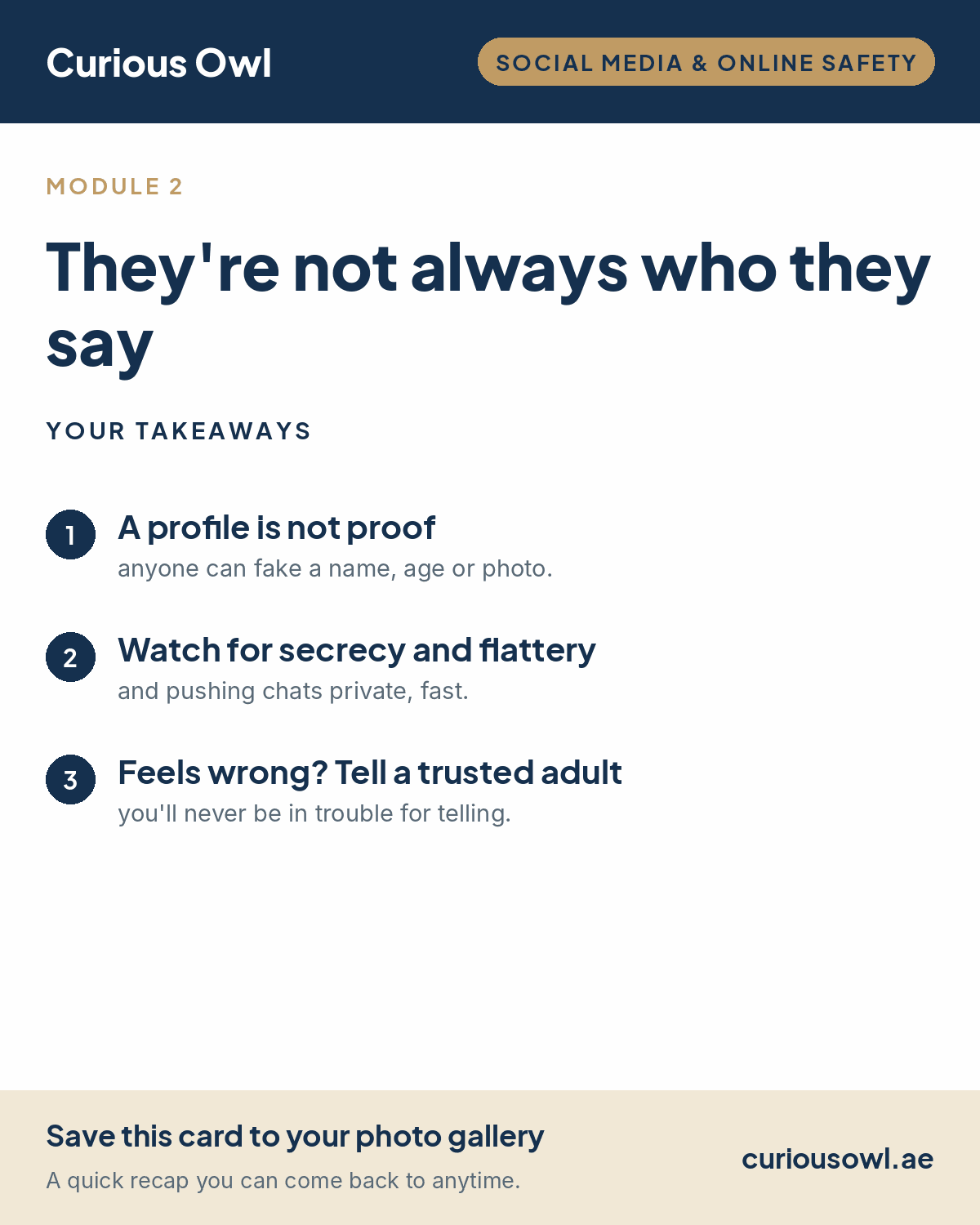
They Are Not Always Who They Say
Same words as the lesson below. Prefer to read? Just scroll down.
The friendly person your own age in a game or chat might not be your age at all. Online, anyone can pretend to be anyone, a photo, a name, an age, all made up in seconds. This is not about fearing everyone you meet, it is about one simple truth: a profile is not proof of who someone really is.
Fake connections follow a pattern. The person is very friendly and full of compliments, and seems to have loads in common with you, which is often done on purpose. Then they slowly try to move the chat somewhere private, and ask you to keep the friendship secret. Secrecy, going private, and pushing things quickly are the warning signs, no matter who they claim to be.
A few clear rules keep you safe. Never share personal details like your address or routine with someone you only know online. Never send private photos to anyone, because once sent you lose all control of them. Never agree to meet alone someone you met online, and never keep an online friendship hidden from your parents. A genuine friend will never pressure you to break these.
The most important rule: if anyone online asks you for photos, makes you uncomfortable, or asks you to keep a secret, that is the moment to tell a trusted adult. It is never your fault, and you will never be in trouble for telling. Zaid, 14, met someone friendly in a game who wanted to chat privately and keep it secret. It felt off, so he told his older sister, who helped him block and report them. Telling someone early stopped it going further.