Could You Spot a Fake?
Same words as the lesson below. Prefer to read? Just scroll down.
Picture three things landing on your phone: a video of a famous footballer promising free consoles, a message saying you have won a gift card, and a profile of a friendly stranger your own age. Could you tell which are real and which are fake? Online, you can no longer trust that something is real just because it looks real. Technology can now create videos of people saying things they never said, and photos of events that never happened. These are called deepfakes, and they get better every month.
Fakes are made to trick you. Fake giveaways use a celebrity’s face to promise free phones, fake news is built to make you angry so you share it, and fake profiles use faces of people who do not even exist. Believe everything you see, and you are easy to fool.
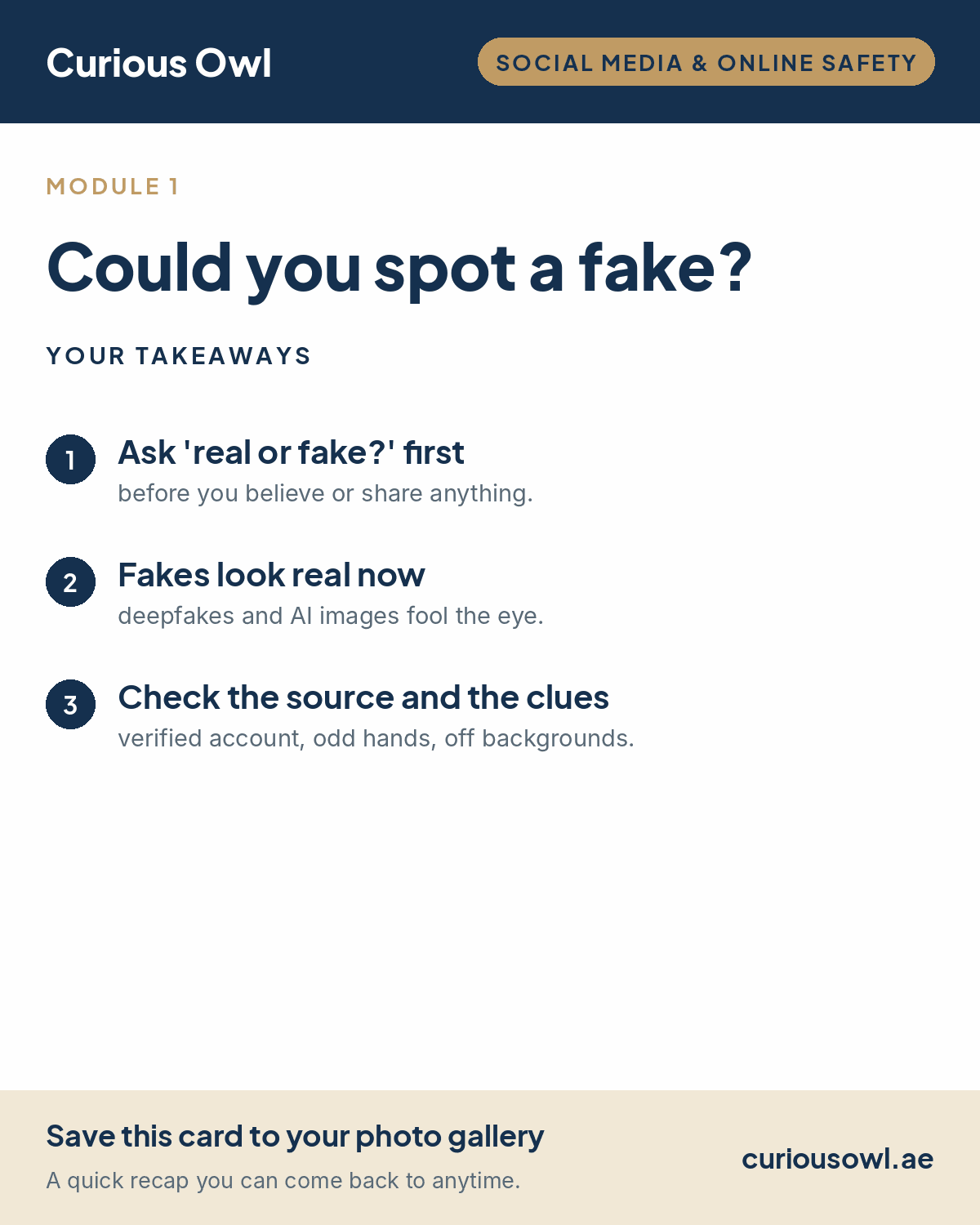
The good news is you can train your eye. Be suspicious of anything too shocking or too good to be true. Check the source: is it a real, verified account? Look for the giveaways in fake images, like odd hands, strange teeth, or backgrounds that do not line up. And before you share anything big, check whether trusted news sources report it too.
Maya, 15, saw a video of a footballer promising free consoles through a link. It looked real, but the account was not verified and his mouth did not match the words. It was a deepfake scam, so she did not click, and warned her friends. Make ‘real or fake?’ a habit before you believe or share anything. Real information never screams at you to act now, and a little healthy doubt is a genuine superpower.