When Something Feels Wrong
Same words as the lesson below. Prefer to read? Just scroll down.
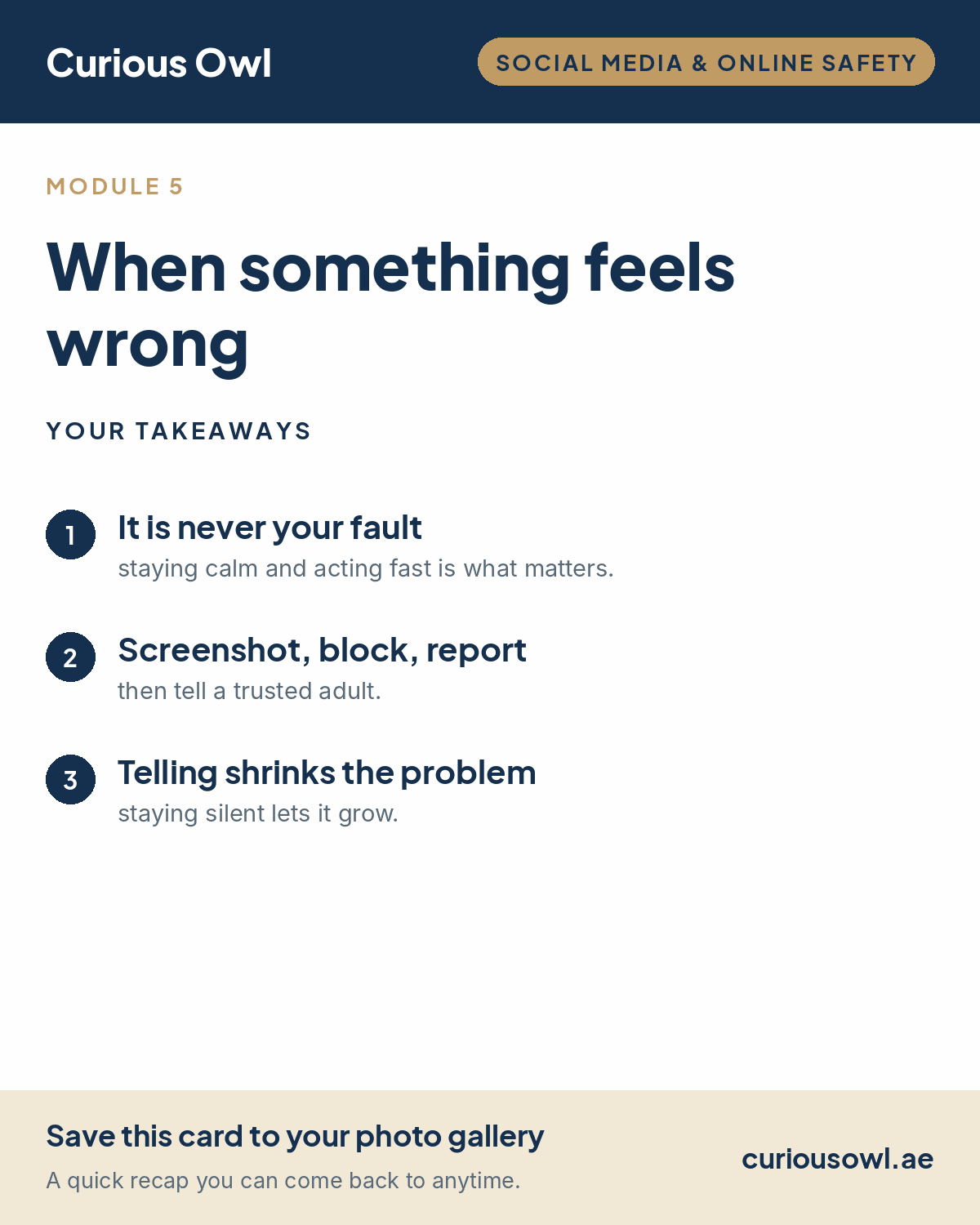
Everyone slips up online eventually: clicks the wrong link, trusts the wrong person. If it happens to you, it is not a disaster and not your fault. What matters is knowing the calm steps to take, so a bad moment does not grow into a big problem. Panicking or hiding it is what makes things worse, not the mistake itself.
If you clicked something or typed in your details, act quickly. Stop, change your password straight away, and change it anywhere else you used the same one. Turn on two-factor, and tell a trusted adult so they can help check nothing else was affected. If someone is bullying, threatening, or pressuring you, do not reply or argue. Screenshot it as evidence, block them, report them on the app, and tell a trusted adult.
Here is what stops most young people getting help: embarrassment, or fear of getting in trouble or losing their phone. But the adults who care about you would far rather help than punish. Staying silent lets a problem grow; speaking up early shrinks it. The person who did something wrong is the one who should feel embarrassed, not you.
A trusted adult can be a parent, older sibling, relative, or coach. In the UAE, for anything serious or threatening you can also call the police on 999. Sara, 15, realised she had typed her password into a fake page and felt sick, but told her dad straight away. They changed her passwords together and it was sorted within the hour. Telling someone early is always the right call.