How Scams Actually Work
Same words as the lesson below. Prefer to read? Just scroll down.
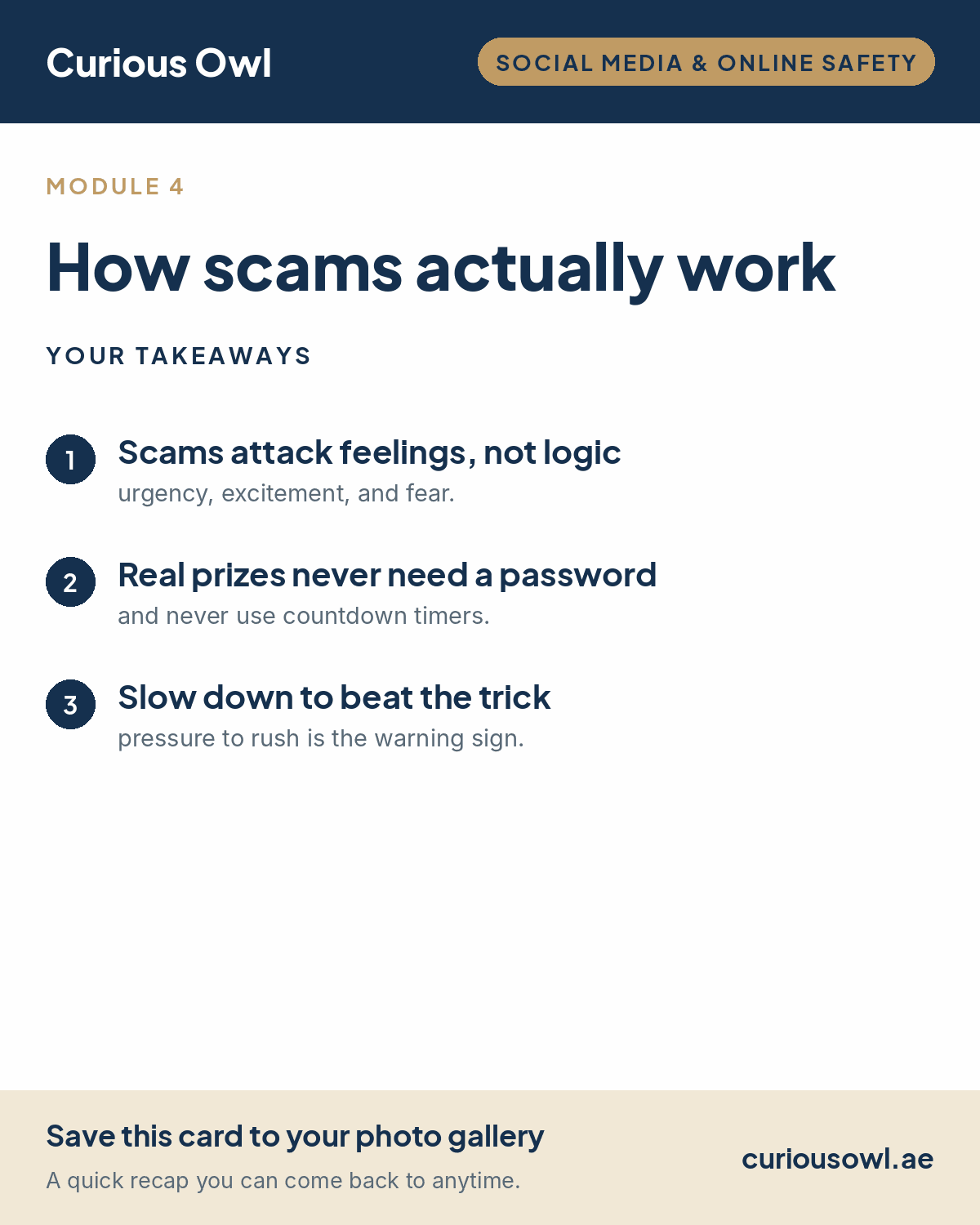
The best scams do not look like scams. They are polished, convincing, and clever, and they work by playing on normal human feelings, not by looking dodgy. A scam is simply a trick to get your money, information, or account, and once you understand how they work, you become almost impossible to fool.
Nearly every scam pulls one of three levers. Urgency: ‘act now or lose it.’ Excitement: ‘you have won!’ And fear: ‘your account will be closed.’ All three do the same job: rush you into reacting before your brain can think. A calm mind spots scams easily; a rushed, panicked mind is exactly what they are trying to create.
Social media is a scammer’s favourite hunting ground. You will see fake giveaways (‘first 100 to click get a free console’), messages from fake ‘brands’ and ‘influencers’, messages that look like they are from a friend whose account was hacked, and fake login pages built to steal your password the moment you type it.
The one habit that beats most scams is simple: slow down. Real companies do not rush you, and real prizes never need your password. When a message pushes you to act instantly, that pressure is the warning sign itself. Omar, 15, got a message saying he had won a voucher and had to ‘claim within 10 minutes’ through a link. The countdown made his heart race, then he remembered real prizes do not use timers, and ignored it. It was a scam built to steal his login.